

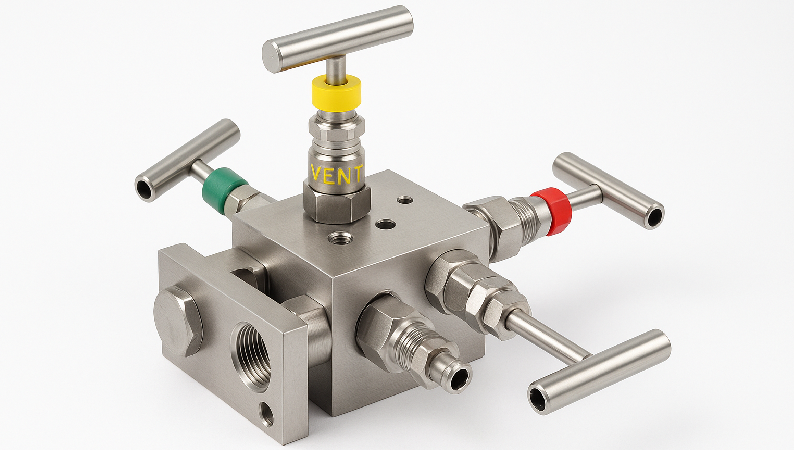
Understanding Valve Manifolds: Types, Design, and Key Features
In the world of industrial automation and process control, efficiency, safety, and precision are critical. One essential component that plays a major role in achieving these goals is the valve manifold. Widely used in industries such as oil & gas, chemical processing, power plants, and pharmaceuticals, valve manifolds help control, isolate, and distribute fluid flow with greater reliability and compactness. In this blog, we will explore what a valve manifold is, its main types, design principles, and key features, helping you clearly understand why it is such an important part of instrumentation systems.
What is a Valve Manifold?
A valve manifold is a compact assembly of multiple valves used to control, isolate, equalize, and vent pressure in instrumentation systems. It is commonly used with pressure transmitters, gauges, and differential pressure instruments in industries like oil & gas, power plants, chemical plants, and pharmaceuticals. Instead of installing separate valves with multiple fittings and pipes, a valve manifold combines everything into a single solid block, improving safety, reducing leakage points, and simplifying maintenance.
Types of Manifold Valves
Depending on system requirements and pressure measurement needs, different manifold valve configurations are available. The most common are:
1. 2 Valve Manifold :-
A 2 valve manifold consists of:
- • One isolation (block) valve
- • One vent or drain valve
It is mainly used in applications where simple pressure measurement is required. The isolation valve connects or disconnects the process pressure to the instrument, while the vent valve allows calibration and maintenance without system shutdown. Choosing a reliable 2 valve manifold manufacturer ensures durability and accurate pressure control.
2. 3 Valve Manifold :-
A 3 valve manifold includes:
- • Two isolation (block) valves
- • One equalizing valve
This type is widely used with differential pressure transmitters. The equalizing valve balances pressure between high and low sides before maintenance or calibration. A trusted 3 valve manifold manufacturer ensures precise pressure balancing and leak-proof sealing.
3. 5 Valve Manifold :-
A 5 valve manifold is the most advanced configuration, consisting of:
- • Two block valves
- • One equalizing valve
- • Two drain/vent valves
It offers maximum safety and operational flexibility. The 5 valve manifold manufacturer designs these units for high-pressure and critical applications such as offshore platforms, power plants, and refineries.
Design of Manifold Valves
The design of a valve manifold is critical to its performance and longevity. A well-engineered manifold ensures smooth operation under extreme pressure and temperature conditions.
1. Compact Single-Block Design
Most modern manifold valves feature a single forged block construction. This compact design:
- • Eliminates welding joints
- • Reduces leakage points
- • Enhances pressure containment
2. Material Selection
Manifold valves are manufactured using:
- • Stainless steel
- • Carbon steel
- • Alloy steel
Material selection depends on media type, temperature, pressure, and corrosion resistance needs.
3. Precision Machining
High-precision CNC machining ensures smooth valve operation, tight sealing, and long service life.
4. End Connections
Manifold valves come with:
- • Threaded connections
- • Flanged ends
- • Tube fittings
This provides flexibility for installation in different systems.
Key Features of Manifold Valves
1. High Pressure & Temperature Resistance :- Manifold valves are designed to withstand extreme operating conditions in harsh industrial environments.
2. Leak-Proof Performance :- Advanced sealing systems ensure zero external leakage, ensuring workplace safety and environmental compliance.
3. Corrosion Resistance :- Surface treatments and high-grade materials protect valves from chemical corrosion.
4. Easy Installation & Maintenance :- Integrated design reduces installation time and simplifies maintenance procedures.
5. Accurate Pressure Control :- Manifold valves provide precise pressure isolation and equalization, essential for instrument accuracy.
Why Choose the Right Manifold Valves Manufacturer?
Selecting the right manifold valves manufacturer is as important as choosing the right valve type. A reputed manufacturer offers:
- • Strict quality control standards
- • Pressure and leakage testing
- • Customization options
- • International certifications
- • Long operational life
Similarly, choosing a trusted 2 valve manifold manufacturer, 3 valve manifold manufacturer, or 5 valve manifold manufacturer ensures superior product performance and compliance with global industry standards.
Applications of Manifold Valves
Manifold valves are widely used across various industries:
- • Oil & Gas processing
- • Petrochemical plants
- • Power generation
- • Pharmaceutical manufacturing
- • Water treatment plants
- • Chemical industries
Benefits of Using Manifold Valves
- • Reduced space requirements
- • Improved system safety
- • Faster installation
- • Lower maintenance cost
- • Enhanced measurement accuracy
- • Long-term operational reliability
Final Thoughts
Understanding the types, design, and key features of manifold valves helps industries choose the right solution for their applications. Whether it’s a 2 valve manifold, 3 valve manifold, or 5 valve manifold, selecting the correct configuration ensures safe and efficient pressure control. Partnering with a reliable manifold valves manufacturer guarantees quality, durability, and consistent performance.
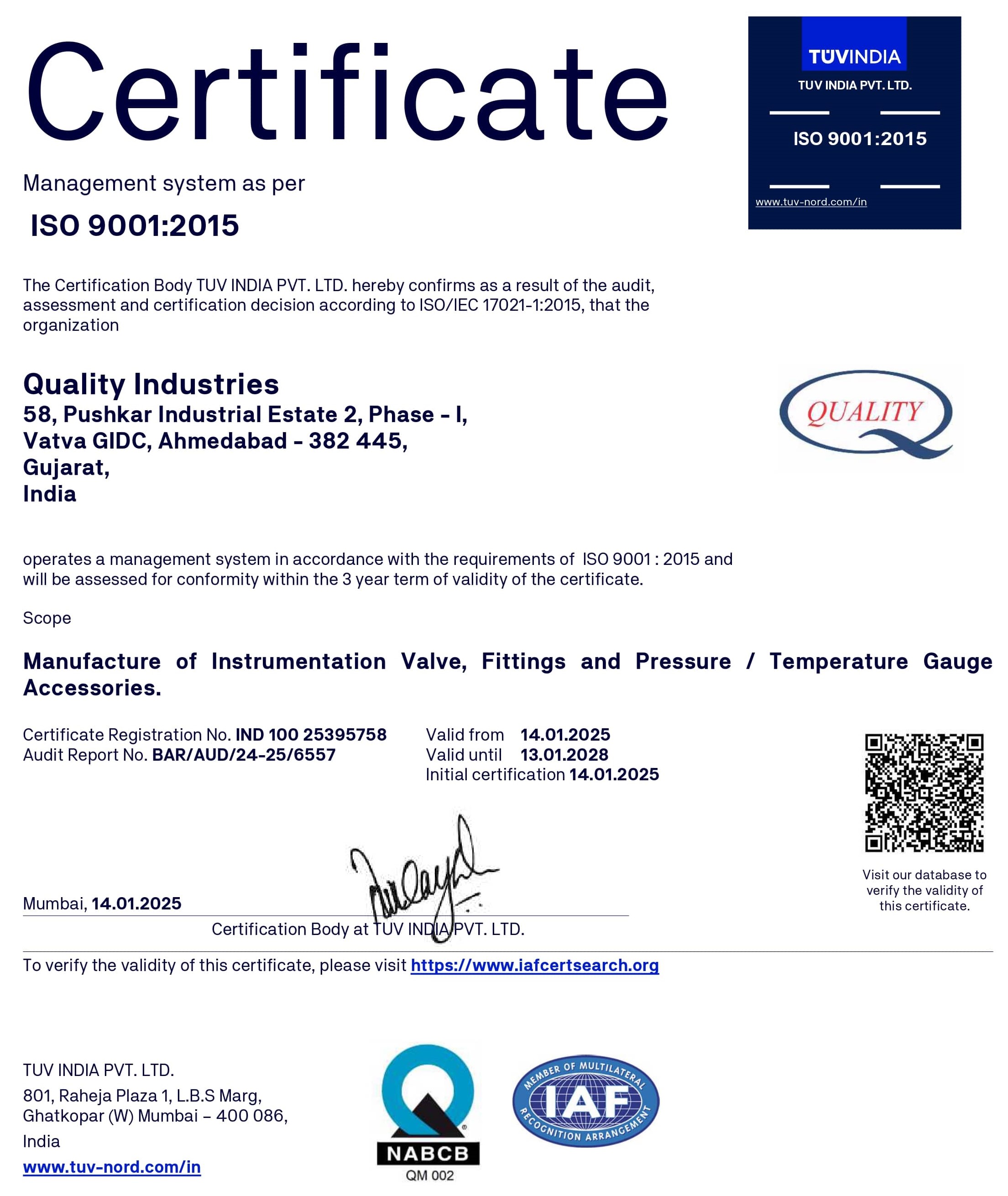

The company started on a very small scale in 2011 and now has the latest manufacturing and testing facility. The company is located in Gujarat, in the western part of India.