

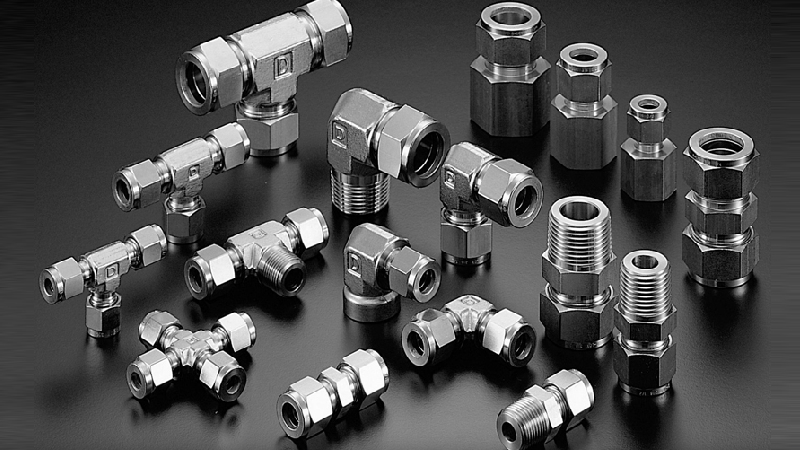
Instrumentation Valves and Fittings: Types, Functions, and Key Features
Instrumentation systems play a crucial role in industrial processes, ensuring accurate measurement, smooth control, and safe operation. Whether it is oil & gas, chemical processing, power generation, pharmaceuticals, or water treatment, every industry relies on high-performance instrumentation valves and fittings to maintain system reliability. These components may look small, but they directly affect process stability, leakage prevention, and overall operational efficiency.
What Are Instrumentation Valves and Fittings?
Instrumentation valves and fittings are precision-engineered components designed to manage, control, and direct the flow of gases or liquids in instrumentation and process control systems. They ensure leak-free connections and help maintain accurate pressure, flow, and temperature monitoring. Unlike standard piping valves, instrumentation valves and fittings are designed for high accuracy, compact size, corrosion resistance, and high-pressure performance. They are typically manufactured using stainless steel, brass, alloy steel, and other high-strength materials.
Why Are Instrumentation Valves and Fittings Important?
These components are essential in industries where safety, measurement accuracy, and system integrity are critical. Their functions include:
- • Ensuring leak-free system connections
- • Providing accurate flow shut-off and regulation
- • Withstanding high pressure and temperature variations
- • Preventing contamination and backflow
- • Enhancing the safety of operators and equipment
A single leakage in an instrumentation line can lead to system failure, product loss, or safety hazards, making the selection of the right valves and fittings extremely important.
Types of Instrumentation Valves
Instrumentation valves come in multiple designs based on application requirements. Here are the most commonly used types:
1. Needle Valves :-
Needle valves provide precise flow control and are widely used in low-flow, high-accuracy applications. Their fine-threaded spindle and tapered needle allow gradual opening and closing, making them ideal for metering applications, pressure gauges, and calibration systems.
Key Features:
- • Precise flow regulation
- • High pressure handling
- • Leak-tight shutoff
2. Ball Valves :-
Instrumentation ball valves offer quick 90-degree turn operation for fast shut-off or on/off control. They are commonly used in sampling systems, gas lines, and corrosive service applications.
Key Features:
- • Full-bore design for minimal pressure drop
- • Suitable for high-pressure systems
- • Long service life with low maintenance
3. Manifold Valves :-
Manifold valves are used with pressure and differential pressure transmitters. They combine multiple valve functions into a single compact body, helping isolate, equalize, and vent the system.
Common Types:
- • 2-Valve Manifold
- • 3-Valve Manifold
- • 5-Valve Manifold
Applications: Pressure transmitters, gauge isolation, calibration.
4. Check Valves :-
Check valves prevent reverse flow and protect sensitive instruments from contamination or sudden pressure reversal. They open only when upstream pressure is higher than downstream pressure.
Applications: Compressor lines, fuel lines, hydraulic systems.
Functions of Instrumentation Valves and Fittings
Instrumentation valves and fittings play several crucial roles, including:
1. Flow Control :- Valves regulate flow rate, pressure, and direction to ensure stable operation.
2. Isolation & Safety :- Isolation valves protect expensive instruments by allowing safe maintenance and preventing accidental damage.
3. Pressure Measurement & Calibration :- Manifolds and gauge valves help accurate pressure measurement by providing equalization and venting options.
4. Leakage Prevention :- High-quality fittings ensure leak-free system performance, even under high pressure or vibration.
5. System Integrity :- They maintain the reliability of the entire instrumentation network, reducing downtime and enhancing performance.
How to Choose the Right Instrumentation Valves and Fittings?
Choosing the right components depends on factors like:
- • System pressure and temperature
- • Type of fluid—gas, liquid, corrosive media
- • Required flow rate and accuracy
- • Material compatibility
- • Space constraints
Always select components from trusted manufacturers to ensure reliability, certification compliance, and long service life.
Conclusion
Instrumentation valves and fittings may be small components, but they form the backbone of process control and measurement systems. From precise flow control to safe pressure isolation, they ensure smooth, accurate, and leak-free operation across industries. Understanding their types, functions, and differences helps engineers choose the right components for efficient and safe industrial performance.
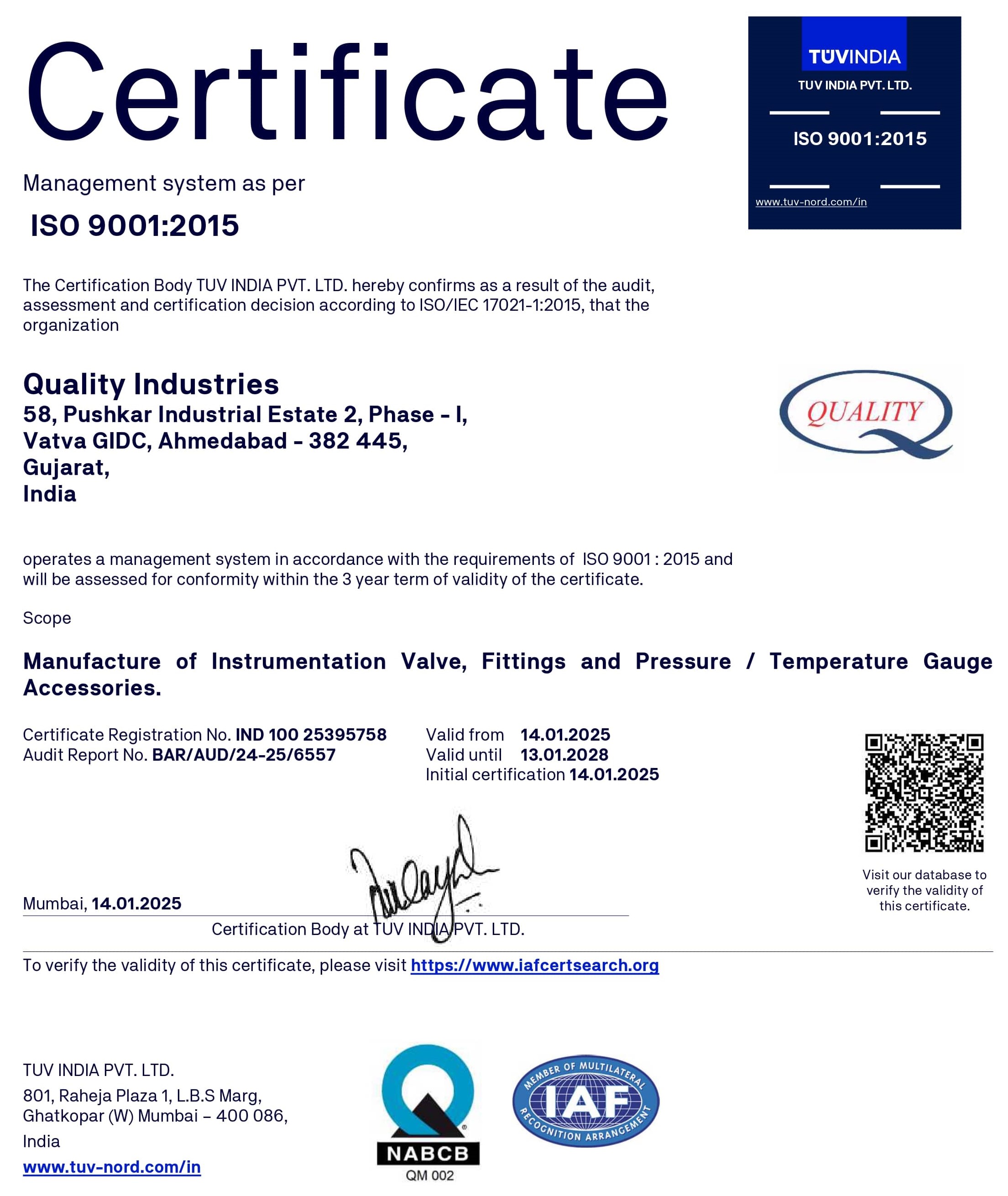

The company started on a very small scale in 2011 and now has the latest manufacturing and testing facility. The company is located in Gujarat, in the western part of India.